
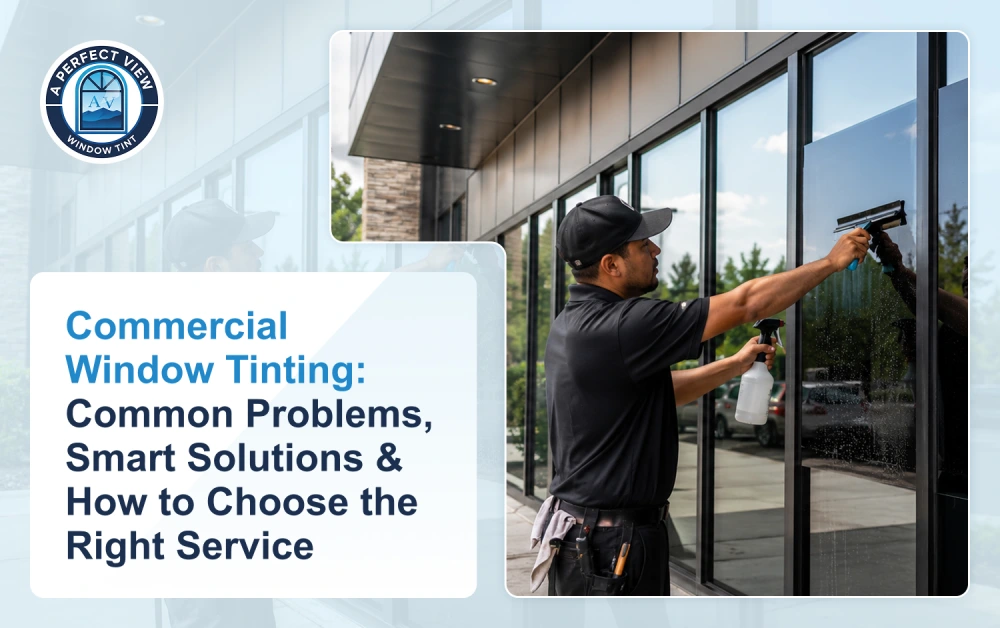
Commercial property owners only discover window problems when their operating costs rise. Heat, glare, UV exposure, and peeling film are common problems they encounter. The right film works on heat, glare, UV damage, fading, privacy and security all at once. But to choose it means to diagnose the real needs of your building, not to choose by darkness of tint. If you are considering commercial window tinting Fort Lauderdale, this guide can help you understand what to look for before choosing a solution.
What is Commercial Window Tinting?
Commercial window tinting is a thin, adhesive-backed film that is applied to existing glass to reduce solar heat, control glare, block UV rays, or provide privacy and security without replacing windows.
We clean the surface, apply the film using a specialized solution, and allow the adhesive to cure. The glass structure remains untouched while gaining the performance that the original glazing lacks. This retrofit costs substantially less than replacement because an office building might spend hundreds of thousands on new glass or thousands on film.
Different films address different objectives:
- Solar control reflects solar energy before it enters
- Glare-control reduces brightness without blocking daylight
- UV-rejecting protects furnishings from fading
- Privacy film blocks sightlines
- Security film holds glass fragments in place during impact
Medical offices, retail storefronts, restaurants, and professional buildings across South Florida rely on window film regularly. Professional commercial window tinting companies fort Lauderdale apply these solutions to properties facing identical solar exposure throughout the region.
What Commercial Window Problems Can Window Film Solve?
Window film solves specific building problems that match film types and performance specifications. Identifying your actual problem prevents unnecessary spending:
| Problem | Appropriate Film Solution | Key Performance Factor |
|---|---|---|
| Excessive heat & cooling costs | Solar-control film | SHGC (Solar Heat Gain Coefficient) |
| Glare on screens & displays | Glare-control or solar film | VLT (Visible Light Transmission) |
| UV exposure & interior fading | UV-rejecting film | UV rejection percentage (99%+) |
| Privacy without appearance change | Frosted/decorative film | Opacity & daytime/nighttime privacy |
| Security & broken glass hazard | Safety/security film | Impact resistance rating |
| Aging film failure (peeling, purple) | Film removal & replacement | Existing condition assessment |
- Heat and hot spots: West-facing windows intensify afternoon heat; south-facing do so continuously. Solar-control film reflects or absorbs energy before entering, reducing HVAC load. Best commercial window film for south florida sun depends on building orientation and glass type.
- Glare on work surfaces: Glare interferes with monitors and displays. Reducing it requires understanding VLT (visible light transmission). Lower VLT means darker appearance; higher VLT means more natural light. The installer balances glare reduction with operational daylight.
- UV exposure and fading: Window film with strong UV rejection (99%+) slows fading but cannot eliminate it. The film extends merchandise shelf life and preserves interior finishes.
- Privacy & security: Privacy film keeps the look, but blocks the view. Security film prevents glass shards from flying in case of impact. The distinction will determine what film is appropriate for medical offices or ground-floor retail.
- Existing film failure. Old film bubbles, peels, turns purple, or develops haze. These signs indicate poor installation or incompatibility. Office window tinting fort lauderdale fl and across Broward County regularly addresses failures by removing and replacing film.
How Do You Choose the Right Commercial Window Film?
Selecting commercial window film is about matching your particular building problem with a type of film that has proven performance specifications, not the darkness of the film.
- Excessive heat? Choose solar-control film
- Glare without light loss? Use glare-control film
- UV fading? Go for UV-rejecting film
- Need privacy? Select privacy or frosted film
- Security concerns? Look for safety/security-rated film
- Multiple concerns? Get professional assessment
To evaluate the best commercial window tinting Fort Lauderdale:
- Identify glass type: Single-pane, double-pane (IGU), laminated, tempered, and coated glass interact differently with film. An installer should confirm compatibility before quoting.
- Assess solar exposure: East-facing windows receive morning sun; west-facing receive afternoon heat; south-facing receive consistent exposure. Orientation determines whether heat control becomes critical.
- Determine required natural light: Conference rooms need visible light; corridors accept darker film. VLT specifications guide this. Our experts recommend film based on actual use, not default tint.
- Check technical specifications: The VLT controls light transmission. SHGC measures the transfer of solar energy. UV rejection determines fading protection. A specification sheet should accompany every quote from commercial window film installers broward county. If an installer provides only the tint percentage, ask for complete data.
How Should You Choose a Commercial Window Tinting Service?
A Perfect View Window Tint brings over 25 years of field experience to South Florida businesses and homeowners. If you need premium residential window tinting Boynton Beach to protect your home, or specialized commercial window tinting to lower storefront energy bills, our team provides tailored glass assessments.
We ensure your installation complies fully with Broward County commercial building codes and solar exposure demands.
Keep these in mind when choosing commercial window tinting services in Fort Lauderdale:
- Technical knowledge: Your installer should know about types of glass and explain specifications such as VLT, SHGC and UV rejection
- Commercial experience: Find out if the business has finished any comparable commercial projects
- Clear quotes: The proposal should include information about the film, product specifications, total area, preparation or removal, schedule, and warranty
- Warranty coverage: Verify the scope of the workmanship and material warranties. Proven work: Examine finished projects and, if possible, request pertinent
Is Commercial Window Tinting Worth the Investment?
Cost of installation is dependent on the area of glass, the type of film and complexity. Premium solar-control film is more expensive than basic UV film. Removing old film adds to the cost. Pricing will depend on access to the window. The price of commercial window tinting Boynton Beach, FL, per square foot depends on the type of property.
ROI depends on building specifics. Extensive western glazing may see meaningful HVAC reduction. Minimal glass-to-wall ratios see minimal savings. Some owners justify film on energy grounds; others on merchandise preservation or glare. All reasons hold validity.
Window film reduces solar heat entering the building and extends cooling season comfort, but it is not a guarantee of lower bills. Energy savings vary by property orientation, HVAC efficiency, operating hours, and film performance. Compare quotes based on performance, warranty, and installation quality rather than price alone.
Conclusion
South Florida’s aggressive sun creates persistent challenges. Heat builds rapidly, glare interferes with work, and UV exposure fades materials faster. Cooling demand stays high for nine months. Commercial window tinting in Fort Lauderdale and the surrounding areas face identical solar loads. Local contractors apply heat-control solutions to offices, retail spaces, and restaurants. The distinction between residential and commercial systems is about building type and use, not climate. South Florida’s intensity makes window film justifiable across both sectors, though commercial buildings with large glazing see more pronounced benefits.
Call us to get a free assessment from A Perfect View Window. Our specialists identify the right film solution for your building, with no obligation.
FAQs
Why is My Commercial Window Tint Bubbling or Turning Purple?
Small bubbles during the first two to four weeks are normal as adhesive cures. Persistent bubbling months later indicates adhesive failure or incompatibility. Purple discoloration suggests UV degradation in older film formulations. Both issues typically justify complete removal and replacement rather than repair.
Can Commercial Window Film Be Installed on Double-Pane Windows?
Compatibility depends on glazing type and film formulation. Some double-pane windows have specialized coatings that conflict with certain films; others have no issues. Professional assessment before installation is mandatory. The installer must examine your specific windows and confirm compatibility in writing.
How Much Does Commercial Window Tinting Cost in Fort Lauderdale?
No universal price exists. A five-thousand-square-foot property may cost $5,000 to $15,000; a two-hundred-square-foot storefront may cost $800 to $2000. Per-square-foot pricing becomes misleading because high-access windows cost less per square foot than difficult-access windows. Request itemized quotes and compare specifications, warranty, and timeline, not price alone.