
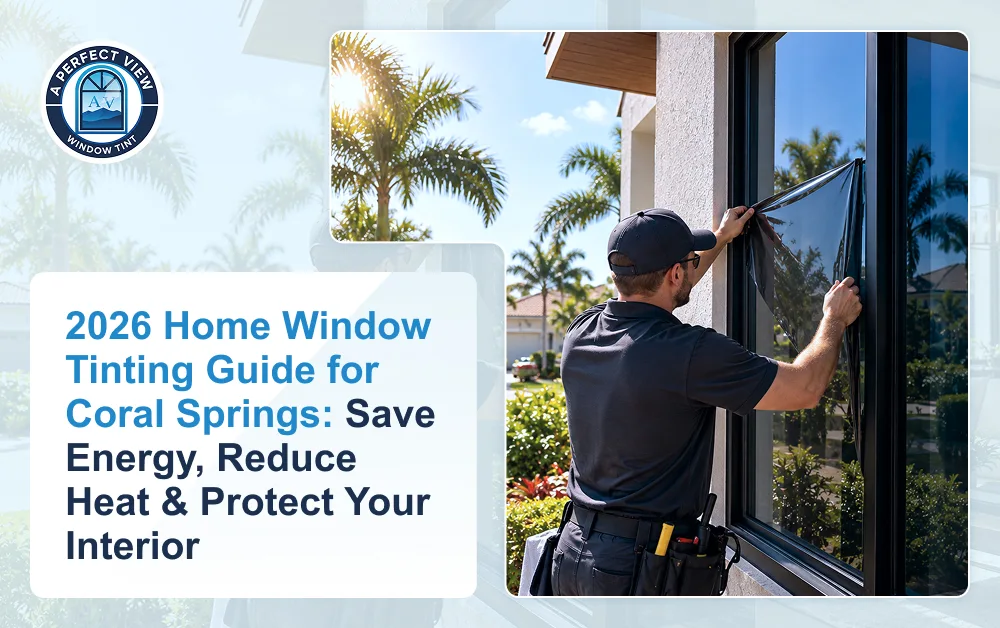
Coral Springs gets plenty of sunshine. The large windows let in a great deal of solar heat. You’ll naturally crank the AC, pull the blinds and still have that one stubbornly hot room. Does that ring a bell?
That’s where residential window tinting Coral Springs becomes really helpful. The right window film can reduce solar heat, cut glare, block UV radiation, and help protect furniture and flooring.
And this is not just a comfort issue. According to the U.S. Department of Energy, windows are responsible for 10% of energy use in buildings. If you can optimize them, you could save a fortune on your energy bills.
So, check out the types of home window tinting in Coral Springs, how to select the right fit, and the benefits of choosing one.
Types of Home Window Tint in Coral Springs
The best film is based on what you want the windows to do. A film that is designed primarily for privacy will behave differently from a film that is designed to reject solar heat.
Check out the different types of residential window films in Coral Springs:
1. Ceramic Window Film
Ceramic film contains microscopic ceramic particles which control solar energy without sacrificing good optical clarity.
If you want to control the heat, but not have your windows look noticeably dark, it’s a good choice.
Some of the key features are:
- High UV protection
- Some premium products have high infrared rejection
- Optical clarity is clear
- Low reflectivity than certain metallic films
- No interference with usual electronic signals
Ceramic film is logical for big windows that get direct afternoon sun. You get solar control without making the room a dark cave.
2. Dyed Window Film
In dyed film, colourant is built into the film to reduce visible light and glare. It is generally selected for appearance, privacy and basic solar control.
But the heat rejection can vary greatly from product to product. Not all cheap dark films are high-performance solar films.
3. Metallic Window Films
Metallic films are made of tiny metal particles that reflect some of the solar energy that strikes the glass.
They can offer:
- High heat rejection from the sun
- Diminished glare
- Privacy
- A more pensive exterior look
The trade-off is aesthetics. Some metallic films are highly reflective, and some products may interfere with radio, cellular, or other signals.
4. Carbon Window Film
Carbon films use carbon particles in order to create a darker look and offer solar control.
They are a good middle ground between basic dyed films and premium ceramic products. If you want a darker look and better solar performance than entry-level dyed film, they’re worth considering.
How To Select the Best Residential Window Tinting Coral Springs Ever Had?
You can select the right home window tinting in Coral Springs by matching the film to the room’s sun exposure, your HOA rules, and what you want the glass to look like from the outside. Let’s have a deeper look at some metrics to look for:
• VLT (Visible Light Transmittance)
It’s the percentage of visible light passed through the film-glass system. A VLT 40 film passes 40 percent of the visible light. Lower VLT means more glare reduction and a darker exterior appearance.
50 to 70% VLT is perfect for areas where you want daylight without oversaturation. It’s perfect for most commercial window tinting Coral Springs projects. If you want aggressive solar control with some daylight, aim for 20-35% VLT.
• TSER (Total Solar Energy Rejected)
TSER is the percentage of the total incoming solar energy (UV + visible + infrared) that the film prevents from entering. At least 50% is needed for meaningful solar control. If you want great warm-climate performance, select those with 65% and above.
• SHGC (Solar Heat Gain Coefficient)
It’s a decimal between 0 and 1. The lower the solar gain, the less heat comes in. TSER and SHGC measure different, but related things. TSER says what the film says no to. The SHGC tells you what gets through.
• HOA (Homeowners Association) Policies
Coral Springs and many Broward neighbourhoods are run by associations. An architectural committee governs the reflectivity, colour and uniformity of glass that faces the street.
You should maintain compliance with low visible exterior reflectance.
5 Benefits Of Installing Residential Window Tinting Coral Springs
Installing home window tints in Coral Springs houses comes up with a lot of benefits, like ower cooling costs, protected interiors, reduced glare, better comfort, and fewer AC repair calls.
1. Reduced Solar Radiation on Your House
Window film can absorb or reflect some of the solar energy that strikes the glass. This reduces the amount of heat transferred into the room.
This can be particularly helpful for:
- Big glass doors
- South and west-facing windows
- Sunrooms
- Rooms with a lot of glass
- Windows with minimal shade from the outside
You may need your A/C still obviously. The window tinting system is designed to reduce the burden on your cooling system.
2. Better Protection for Floors and Furniture
Fabrics, wood flooring, artwork, carpets and other interior surfaces can be slowly bleached by sunlight.
UV radiation is one factor, but visible light and sun exposure also play a role.
With a quality installation of residential window film in Coral Springs through A Perfect View Window, you can greatly reduce the amount of UV light that comes through the glass. This adds another layer of protection to your interior.
3. Reduction of Glare
Have you ever tried to watch TV in a room with the sun shining on the screen?
Affects your viewing experience, right?
At A Perfect View Window, we use high-quality materials that can reduce the intensity of incoming visible light to make rooms more comfortable for reading, working and watching screens.
The main challenge is to select the right VLT. If you go too dark, you may solve glare by creating another problem: too little natural light. We’ve a dedicated team of experts to help you select the right fit.
4. More Stable Indoor Comfort
Temperature variations can occur within a single room due to window areas. One side feels good. The space next to the glass is heated.
A perfect residential window tinting Boca Raton project can reduce that imbalance by limiting the amount of solar energy that comes through the window. This can be particularly helpful in rooms with lots of exposed glass.
Why Choose A Perfect View Window For Residential Window Tinting Coral Springs?
Selecting window film is only part of the equation. The way the film looks, performs and holds up over time depends on the installation itself.
At A Perfect View Window, we have decades of experience in home window tinting in Coral Springs.
Check out what makes us unique:
- Film Based on Your Real Needs: We help you choose based on heat reduction, glare, privacy, UV protection, look and other priorities.
- Proper Evaluation of the Glass: Different types of glass may respond differently to window film. We look at what glazing is already in place before recommending a product.
- Professional Installation: Careful glass cleaning and precise application result in fewer bubbles, contaminants, lifts and visible imperfections.
- Performance-based Recommendations: We can help you compare film specs such as visible light transmission, solar heat rejection, and UV protection so you know what you’re paying for.
Conclusion
When selecting a window tint, consider heat rejection, VLT, UV protection, glare control, glass compatibility and warranty.
If you’re a homeowner considering residential window tinting Coral Springs, A Perfect View Window can help you match the film to your home’s actual requirements. Contact us now for more information!
Frequently Asked Questions (FAQs)
Does window tint block heat?
Yes. Solar control films can reduce the amount of solar energy that comes through windows. Performance will vary depending on the film, glass, window orientation and installation.
Will window tint make my house dark?
Not necessarily. High-performance films can offer solar control while maintaining a relatively high level of visible light transmission.
Does window film stop furniture from fading?
Could help. Quality films can significantly reduce UV transmission, although fading also depends on visible light, material type, exposure time, and other factors.
How to choose the best commercial window tinting Coral Springs ever had?
Office spaces often require a different balance of glare control, natural light, privacy and solar heat reduction. The choice of film must take into account the glare on the screen, the large glass areas and the cooling of the building.